
This UK-focused article explains iodine needs in pregnancy, breastfeeding, babies and young children; food sources of iodine (including dairy, fish, eggs and fortified products); plant-based considerations; and when to seek professional advice on supplements. It is general educational content, not individual medical advice. Guidance may vary by age, health status and clinical history, so readers should consult NHS guidance and a qualified health professional (GP, midwife, dietitian, health visitor) for personalised recommendations
Iodine might not get as much attention as iron or vitamin D, but it plays a vital role in your baby’s brain development, especially in pregnancy and early life.
In this guide, we’ll cover:
- what to avoid
- why iodine matters
- how much you and your child need
- best food sources
- when supplements may help
Why iodine is important
Iodine is a mineral needed to make thyroid hormones. These hormones support:
- brain and nervous system development
- growth
- metabolism and energy regulation
During pregnancy and breastfeeding, iodine needs increase because mum supports both her own thyroid hormone production and baby’s development.
Iodine is an essential micronutrient meaning it can only be obtained exclusively through the diet or via supplementation or fortification. Therefore, it is recommended that we achieve the correct amount of iodine through a variety of food sources in our diet to help keep our body healthy.
Can you have too little or too much iodine?
Yes – both can be a problem.
Too little iodine
Iodine deficiency (when we have an insufficient supply of iodine in the body) may cause the thyroid to work overtime and this can result in an enlarged thyroid gland causing a swelling in neck. This is the body’s attempt at ‘trapping’ any iodine available – in the UK however, this is actually fairly rare.
More commonly, low levels of t
hyroid hormones can cause symptoms such as tiredness, dry skin, or muscle aches.Too much iodine
Very high iodine intakes (especially from certain supplements like kelp/seaweed) can also disrupt thyroid function.
How much iodine do you need?
The table below, taken from the British Dietetic Association iodine factsheet, show how much iodine is needed for adults, and during pregnancy and breastfeeding.
| Life Stage | Iodine required per day (mcg) |
| Adults | 150 |
| Pregnancy | 200 |
| Breastfeeding | 200 |
For babies and children, requirements are lower and increase with age. The table below shows iodine requirements for young children.
| Age | Iodine required per day (mcg) |
| 6-12 months | 60 |
| 1-3 years | 70 |
| 4-6 years | 100 |
| 7-10 years | 110 |
Adapted from: British Nutrition Foundation Nutrient Requirements
Note: mcg and µg (ug) mean the same thing.
Best food sources of iodine
Iodine is found in a relatively small number of foods. The main food sources in the UK are:
- Milk and dairy foods
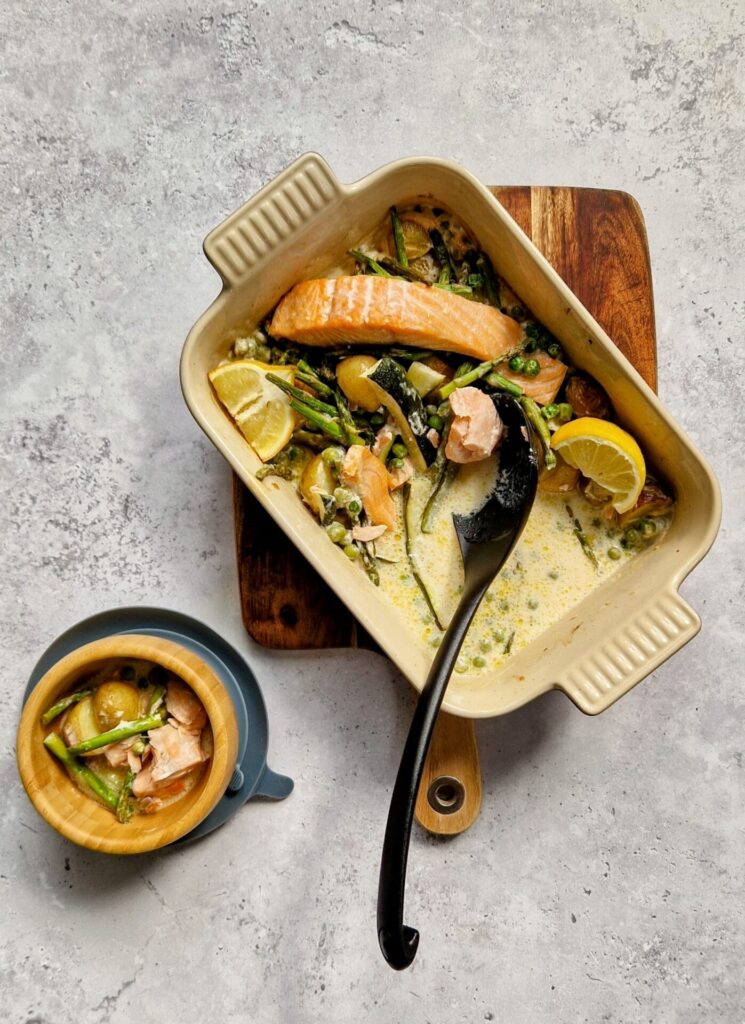
- Fish
- Eggs
- Some fortified foods
If you eat dairy and fish regularly, you’re more likely to meet your iodine needs.

Iodine and plant-based diets
If you avoid fish and dairy, your iodine intake may be lower, so it’s worth being aware of and planning your intake accordingly.
Plant-based drinks
Not all plant-based milk alternatives are fortified with iodine. Check the labels and choose options that are iodine-fortified where possible. You can use this blog to compare plant-based drinks for children.
Supplements
If your diet is vegan or dairy/fish-free, it may be worth discussing your iodine intake with a health professional – e.g. your GP, midwife, dietitian, nutritionist or health visitor, particularly if you are pregnant, breastfeeding, or trying to conceive.
The table below, adapted from the British Dietetic Association, shows the iodine provided by different food sources.
| Food | Portion | Average iodine/portion (mcg)(actual iodine content will vary) |
| Cow’s milk | 200ml | 50-100** |
| Yoghurt | 150g | 50-100** |
| Cheese | 40g | 15 |
| Haddock | 120g | 390 |
| Cod | 120g | 230 |
| Plaice | 130g | 30 |
| Salmon fillet | 100g | 14 |
| Canned tuna | 100g | 12 |
| Prawns | 60g | 6 |
| Scampi | 170g | 160 |
| Eggs | 1 egg (50g) | 25 |
| Meat/poultry | 100g | 10 |
| Nuts | 25g | 5 |
| Bread | 1 slice (36g) | 5 |
| Fruit and vegetables | 1 portion (80g) | 3 |
**Depending on the season, higher value in winter


Should you take an iodine supplement?
Some people can meet iodine needs through food alone. Others may benefit from supplementation.
You may want individual advice if you:
- are planning pregnancy
- are pregnant or breastfeeding
- avoid dairy and/or fish
- follow a vegan diet
Many pregnancy multivitamins include iodine, but it’s important to check the label carefully. Avoid kelp/seaweed supplements in pregnancy unless specifically advised by a qualified professional, because iodine levels can be highly variable, and possibly result in excessive intakes of iodine.
For children, an iodine supplement may be recommended if they don’t include any fish or dairy in their diet. This blog on nutritional supplements for children might be helpful, or discuss with your GP or a registered dietitian or nutritionist.
Practical tips for parents
- Include regular iodine-containing foods in your weekly routine.
- If using plant milks, check for iodine fortification.
- If pregnant, trying to conceive, or breastfeeding, review your supplement label with a professional.
- Don’t rely on seaweed/kelp products for iodine.
- If you’re worried about intake, seek individual advice from a qualified health professional
FAQs about iodine in pregnancy, breastfeeding and early childhood
1) Do I need an iodine supplement in pregnancy?
Iodine needs do increase during pregnancy, but not everyone needs to supplement. Some people will be able to meet their iodine needs through food, while others may need a supplement, especially if they avoid fish and/or dairy. Many pregnancy multivitamins contain iodine, so check your label and avoid doubling up. If you’re unsure, speak to your midwife, GP or a registered dietitian/nutrition professional.
2) Can my child get enough iodine on a plant-based diet?
It’s possible, but it needs planning. Iodine sources are more limited in plant-based diets, and not all plant-based drinks are iodine-fortified. Check labels carefully and include fortified foods where possible. If your child avoids dairy and fish, discuss whether supplementation is needed with a qualified health professional.
3) Are seaweed or kelp supplements a good iodine source?
These are usually not recommended, particularly in pregnancy, unless advised by a qualified professional. Iodine content in seaweed/kelp products can vary a lot, which may lead to excessive intakes that can affect thyroid function. Food sources and appropriately chosen supplements are generally better options for sufficient iodine intake.