
Finger foods for your baby can be a brilliant part of weaning – helping babies explore new tastes and textures, practise picking food up, and build confidence with eating. But in the early days, finger foods can also feel a bit daunting (especially if you’re worried about gagging or choking).
This blog is a “thinking outside the box” guide to finger foods for your baby, focusing on options that often work well in the early stages
It’s normal to feel nervous about finger foods
Many parents feel anxious about offering finger foods at first. Even when you know that startin
g with soft, baby-friendly options is a sensible and safe approach, it can still feel scary watching your baby manage pieces of food on their own.One approach that can help is starting with purées or mashed textures first, then moving onto finger foods once baby seems more confident with swallowing and managing thicker textures. Some families introduce finger foods right from the start of weaning, and others build up to them more gradually – both approaches can be OK, depending on your baby and your comfort level. To find out more about baby led weaning and how to offer finger foods in a way that feels comfortable for you, check out this blog.
Gagging is completely normal
Gagging can look and sound alarming, but it’s a normal part of learning to eat. Many babies gag more frequently at the start, especially when they bite off a piece and are still figuring out how to move food around their mouth.

It can be reassuring to know that babies’ gag reflex is more sensitive than adults’ and sits further forward in the mouth, which can help them bring food back up and out. That said, it doesn’t stop gagging feeling frightening in the moment.If you’re ever unsure whether your baby is gagging or choking, it’s worth reading up on the difference (and making sure anyone who feeds your baby understands it too). You can also read more on preparing common choking hazard foods safely for babies, here.

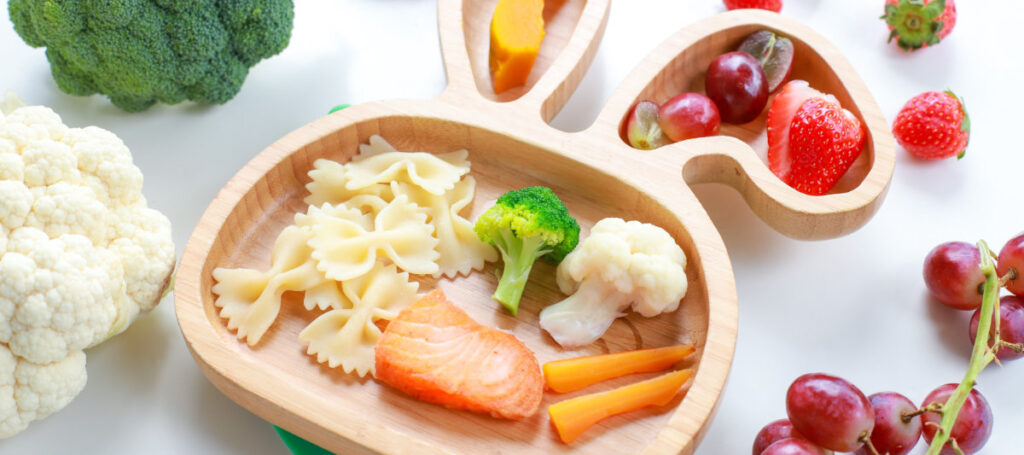

Finger food ideas that often work well in the early days
We often find that certain finger foods for your baby tend to work better than others at the beginning – especially foods that are soft, easy to hold, and less likely to break into hard chunks.
Below are some early finger food options that many babies do well with.
Broccoli
Well-cooked broccoli can work well because it gives babies a “stick” to hold. Many babies start by sucking the head of the broccoli, then progress to tearing off small bits with their gums as their skills develop.
Cucumber
Cucumber can be a good early option if you remove the tough skin and focus mainly on the softer, jelly-like section in the middle. It can also feel soothing on sore gums.
Banana
Cut lengthways into strips, banana is a great food for babies to grasp. At first it may get mashed in their hands – that’s all part of the learning. Banana is soft enough to squash down in the mouth.
Fusilli pasta
Well-cooked pasta can be a great finger food as long as it’s soft enough and baby can grasp it. Many babies enjoy practising picking up pasta shapes, and it tends to break down easily in the mouth.
Kiwi
Kiwi is another fruit that babies can often tear apart easily with their gums. It tends to flatten as it goes into the mouth.
Orange slices with the skin on
Orange slices can allow babies t
o grip the wedge and suck the juice from the middle. If offering orange, it may help to remove any thicker/tougher parts of the skin so it’s less likely to get stuck.Bread fingers
Offering bread without the crusts can be easier for babies. Lightly toasted bread can be a little easier for babies to hold onto and practice biting and chewing. You can read more about offering bread to babies in my blog.
Avocado
Avocado is nutritious and soft, but it can be tricky at first because it’s slippery and hard to grip. Many babies manage it better over time as their hand skills improve.
Finger Foods For Your Baby
Remember – always sit with your baby while they’re eating (especially with finger foods). If your baby is reluctant to bite and chew, role modelling can help – letting them see you biting and chewing can support their learning.
For more tips on preparing finger foods for babies between 6 and 12 months, check out my detailed blog. You can also find plenty more advice and guidance around How To Wean Your Baby, in my book.

How To Wean Your Baby
This is a book that heavily focuses on the HOW TO of weaning. I’ve tried to make it easy, clear and enjoyable for parents to read it too. So I have focused the introduction and all the advice pages on checklists, infographics, notes pages, step by step guides and lots more.