I hear from parents so often who are struggling with dinner in their households. It’s a time of day when everyone is running low on energy and patience, and meals can become stressful or foods rejected. This blog is all about how to get kids to eat dinner without the battle – hope it helps just a little bit for you!
If you find yourself spending time cooking meals only to have them rejected, stop right there. You are not failing – you might just be making the job too hard for your little one (and for yourself) at the most difficult time of the day.

Why is dinner so tricky?
Dinner is often the meal we consider to be the most ‘nutritionally robust’ of the day. It may be the only meal many families are eating together, particularly when busy work or school schedules mean everyone is out of the house for other meals. This can sometimes result in complex dishes that require time and effort to prepare AND that are harder for our kids to eat.
Here’s why dinner can be the hardest meal for kids:
- Tiredness and sensory overload: By the end of the day, their little brains are overwhelmed and exhausted. Eating is a huge sensory task involving sight, smell, and texture, as well as physical coordination and balance.
- Overwhelm from everyone: Often during the evening meal emotions can be running high due to day to day stresses, tiredness or overwhelm that both adults and little ones might be feeling. This can make the mealtime feel stressed and stress really affects appetite.
- The problem with novelty: Dinner is not the time to be experimenting with new foods. When your child is tired, their system is on high alert. Novel/new foods are overwhelming, and their capacity to learn new behaviours (like accepting a new flavour or texture) is minimal. If we’re offering new or unfamiliar foods at a difficult time of day, without accepted/familiar foods alongside, it can add unnecessary stress and pressure to the meal
- Dinner foods are often more complex: A lot of “typical dinner” foods are mixed together – e.g. pasta with sauce, stir-fries, curries, casseroles, stews, chilli, shepherd’s pie. They can be delicious and balanced, but they’re also hard work. When everything is mixed up, children can’t easily see what they’re getting or predict what each bite will feel like. One forkful might be soft and slippery, the next might be crunchy, stringy, or spicy. For many kids (especially in a fussy phase, or for sensory-sensitive children), that unpredictability can feel overwhelming. Refusing the meal is their way of saying “this is too much right now.”
- Coordination fatigue: Using a fork or spoon requires fine motor skills that are exhausted after a long day of playing or learning. Foods they can grab with their hands are simply less effort. Even for older children who may be competent using utensils, it still requires additional effort that they may not have the capacity for.
- Fluctuating appetites: Dinner often comes at the end of a full day of eating, and children’s appetites aren’t consistent from day to day (or even from hour to hour). Some days they’ll be genuinely hungry at teatime, other days they’ve already topped up at nursery, with an after-school snack, or simply had a bigger lunch than usual. It can also depend on timing. Some children need food soon after they get home because they’re running on empty; others arrive home tired and “wired”, or they’re still full, so they eat very little at the table. None of that means you’re doing anything wrong, it’s just normal appetite variation.
- Main meal = high stakes. Often dinner is thought of as the main hot meal, where the veg comes in etc. Therefore the pressure on kids to eat it is often higher than at other times of the day!
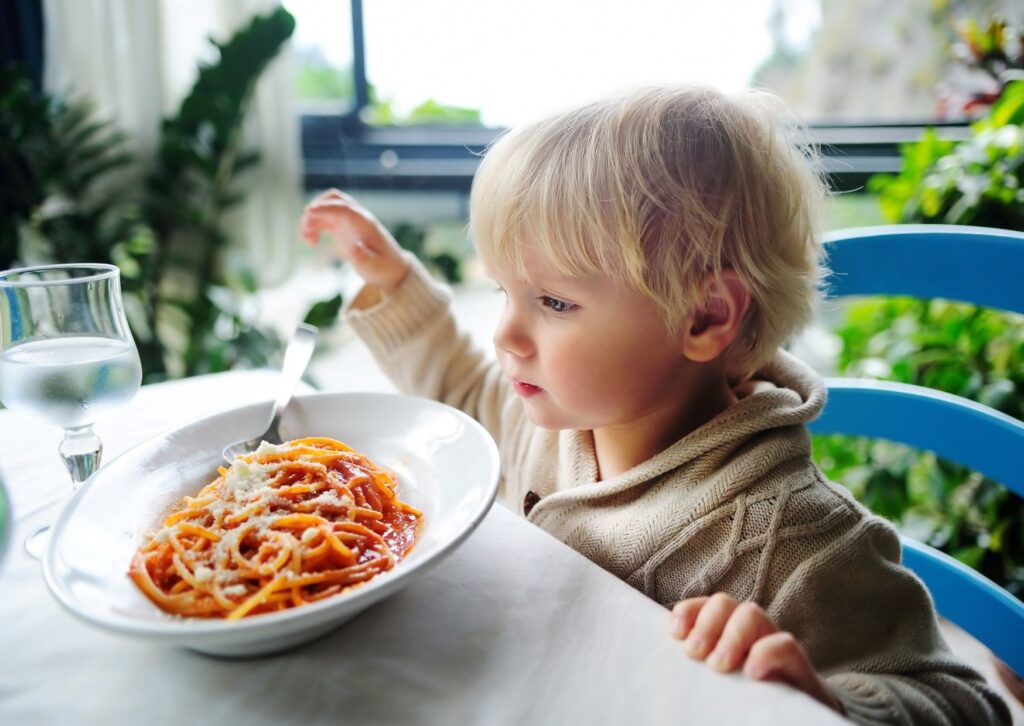
Make your life easier
Making mealtimes easier for yourself is one of the most powerful ways to reduce pressure for your little one too. When you take the intensity down, give yourself permission to breathe, and stop holding dinner to impossibly high standards, everything softens – and that alone can make a huge difference to how your child eats.
So many parents push themselves to the point of exhaustion by dinnertime, or find themselves dreading the whole routine. If that’s you, it’s absolutely OK to step back, lower your expectations and prioritise your own wellbeing. A calmer parent creates a calmer atmosphere, and a calmer atmosphere helps children feel safe, relaxed and far more open to exploring food in their own time.
One simple shift is to embrace meals that are:
- easy for you to prepare
- easy for them to eat
- easy to clear away afterwards
Small changes like these can transform the whole tone of your evenings and make mealtimes feel lighter for everyone.
How can I make evening meals easier at home?
Here are some of my ideas for bringing the intensity down of mealtimes and making them more enjoyable for parents and children:
- Put less pressure on mealtimes by adding extras at other mealtimes
- Put less pressure on by remembering that meals don’t have to be (and usually aren’t) perfect
- Think about the context of what your little one will have eaten throughout the whole day, not just this meal
- Take a deep breath and ground yourself a little before starting the meal – step away if you ever feel stressed yourself or overwhelmed
- Focus on the experience of the mealtime, over what is getting eaten
- Offer a starter platter of veggies and a dip before the meal even starts. This can take the edge off hanger and often is more likely to get eaten
- Offer sides and allow your little one to serve these to themselves
- Offer 1-2 foods that your little one readily accepts at mealtimes
- Offer anything new – meal or ingredient – in small amounts so that it doesn’t feel overwhelming
- Keep mealtimes to 15-20 minutes and avoid stretching it longer, especially if they don’t want to be a part of it.
- Use fridge raid/buffet style meals regularly to make mealtimes more casual
- Lower your expectations of how much should be eaten – remember you should decide what foods are offered, but it’s them who is in charge of how much gets eaten!

A few other things to think about:
Try deconstructed meals
You don’t need to cook separate meals for everyone in the family. Making the meals you enjoy suitable for the whole family is a better way of approaching dinner in the long term. If they see you eating and enjoying food, they are far more likely to accept that in the long run.
However, if you’ve prepared spaghetti bolognese for yourself, but you know your child struggles with mixed/wet textures, simply try to serve the meal “deconstructed.”
Your table might include:
- A bowl/pot of plain pasta
- A pot of sauce on the side
- A bowl of grated cheese
- Some yoghurt
- Some chopped veg sticks
If your child only chooses the plain pasta and fruit, that’s okay. Sitting together and seeing you enjoy a variety of foods is still really valuable exposure for your little one.
Try to choose some sides that your child likes and that you can just pull out of the fridge/cupboard (e.g. cheese or yoghurt). It doesn’t matter if they don’t “go” with the main meal option – the goal is, ideally, to make sure there are 1-2 foods that they feel comfortable eating.
Check out my blog on balanced diets for young children, for more guidance on offering a balance of foods.
Realistic portion sizes
A large plate of food can be intimidating for a tired child. To them, it can look and feel like a mountain they have to climb. Instead, whenever serving or offering a new food, keep it really small. For example, just a tablespoon of pasta or one slice of cucumber. It is much easier for a child to eat a small amount and ask for “more” than to face a full plate and reject it all.
Also remember that how much they will want to eat is going to be really variable…and we aren’t in control of their appetites. Try going in with small portions generally, and allowing them to ask for seconds if they want more. This is much less overwhelming!
A helpful mindset shift is to treat dinner as one opportunity for food, rather than the moment they must “catch up” on veggies or calories. Your job is to offer; their job is to decide whether and how much.
You can read my factsheet on portion sizes for young children for more on what a realistic portion size looks like for your child.
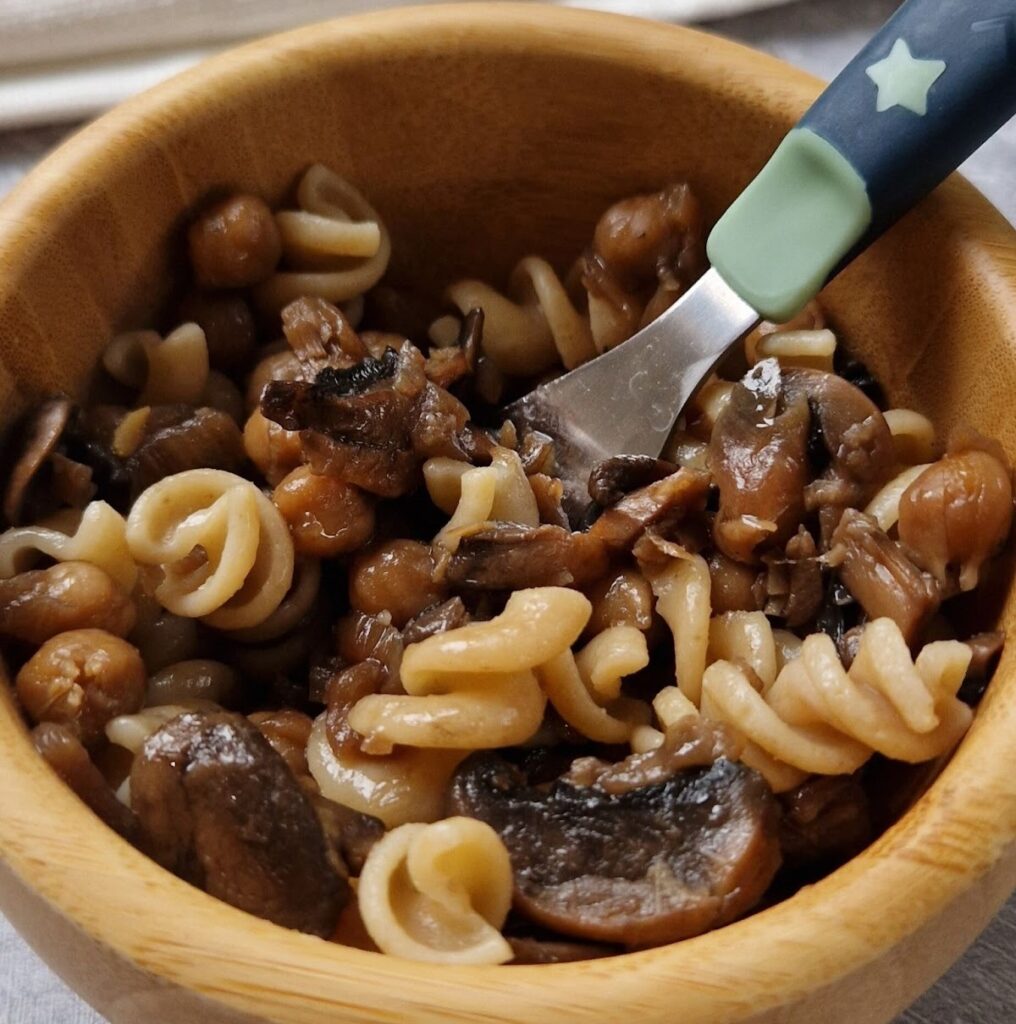
“Family style” eating
This is my favourite way to serve meals 1-2x a week! Try putting the pots and bowls in the middle of the table, and let your children serve themselves – or if they’re younger, let them point to what they want and you help them with serving. This provides little ones with a huge sense of autonomy and control – something toddlers crave! It also removes the pressure and expectation of having a plate full of food that they don’t want to eat. If they serve it, they are far more likely to try it.
Consider timing
Sometimes, 5:30 pm or 6:00 pm is just too late. If your child is prone to “hangry” meltdowns before dinner, they may have missed their hunger window and moved straight to exhaustion. If an earlier dinner doesn’t work for your family, try to offer a “starter” or snack plate slightly earlier. This takes the edge off their hunger so they can come to the table calmer, even if they eat less of the main meal.
Accepted sides
Always ensure there is something on the table you know they will eat, even if it’s just bread and butter or fruit. Try to remember that this isn’t “catering” to fussiness; it’s providing a safety net. When a child knows there is something safe available, their anxiety drops and they are more able to be more open to exploring the other foods on the table.
Reframing mealtimes
Remember that mealtimes are about more than just the food. A balanced diet doesn’t happen in one meal alone, it’s the pattern of foods they’re eating across the day, week, or even month.
Shift your focus to helping them feel supported and included at the dinner table by offering them choice and not expecting a huge amount from them, either in volume or variety. If everyone leaves the table relatively happy, you’ve had a successful mealtime!
I really hope you’ve found this blog helpful. Taking the pressure off yourself and your child is the single biggest step you can take towards calmer evenings. Remember, if dinner ends with a half-eaten plate but a happy child (and parent!), that is a successful meal. Focus on the environment, the connection, and making sure everyone has something to eat, and try to let go of the nutritional guilt at the end of a long day.
I know inspiration for WHAT to actually feed your family is often what parents need, so I’m going to be sharing meal ideas to make evenings easier, for everyone. I’ll be focusing on everything we’ve discussed in this blog – easy to eat, easy to prepare and something for everyone to eat.