
If you’re thinking about offering your baby or toddler a plant-based milk option like soya, oat or almond, this guide is a great place to start. One quick thing to know first: in the UK, these products can’t legally be called “milk” anymore, so you’ll now see them labelled as plant-based “drinks” in the shops. Because of that, we’ve written a brand new, fully updated guide called Plant-based drinks for babies and toddlers, which has the latest NHS and BSACI recommendations and detailed label-checking tips.
We’ve kept this original blog live so parents searching for plant-based milks for babies and toddlers can still find the advice they need, and we cover when these drinks can be introduced, guidance for vegan families, how they compare to cow’s milk nutritionally, and which ones to avoid.
What are the recommendations?
Plant-based drinks (often called “milk alternatives”) are something many parents ask about, whether for allergies, family preferences, sustainability, or simply because there are so many options in the supermarket now.
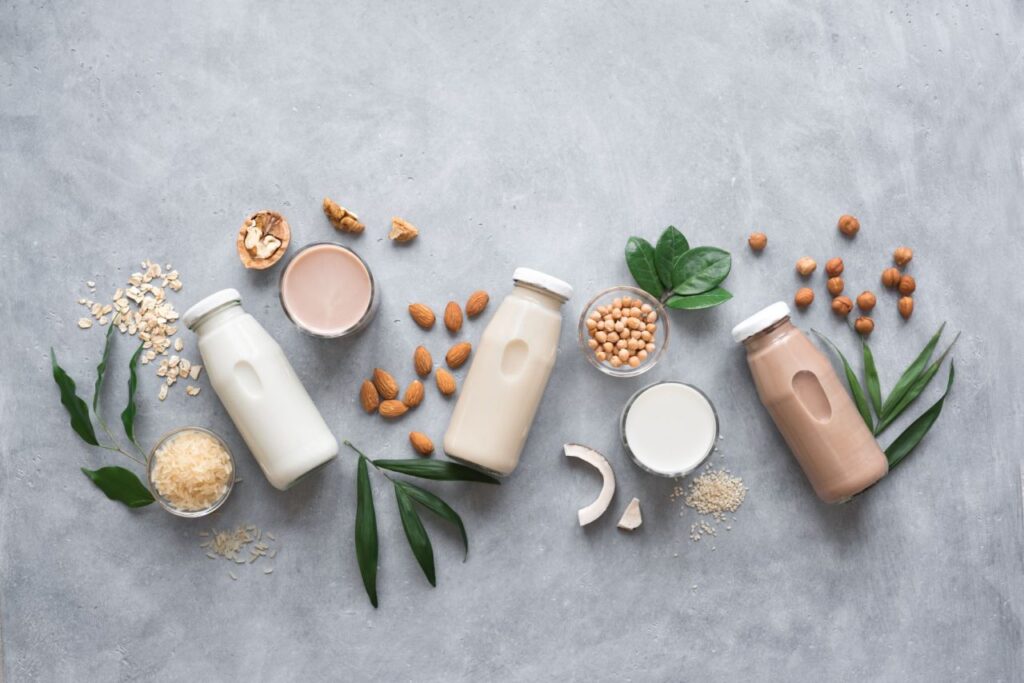
When can babies and toddlers have plant-based milks?
Cow’s milk can be offered as a main drink from 1 year.
Before 1 year, it can be used in foods from around 6 months, but it’s not recommended as a main drink.
The NHS states you can offer unsweetened, fortified plant-based alternatives (for example soya, almond and oat drinks) from 1 year as part of a healthy, balanced diet.
You can use fortified plant-based drinks in cooking from around 6 months (e.g., porridge, cereal, sauces), but they’re not recommended as a main drink before 1.
You can read more about milk recommendations for babies and toddlers here.
Vegan infants
If your family is vegan or follows a plant-based diet, unsweetened, calcium-fortified plant-based drinks can be offered from 1 year as part of a balanced diet that includes enough energy, protein and calcium.
Many families find fortified, unsweetened soya is a practical option because its protein content is more similar to cow’s milk than many other alternatives. If soya isn’t tolerated, some families use other options, it may be worth getting personalised support to make sure everything is covered nutritionally.
Are plant-based milks nutritionally better?
If your child tolerates and accepts cow’s milk, there’s no clear nutritional advantage to switching.
If you are choosing plant-based drinks, fortified options can help to make sure that you’re including key nutrients (like calcium, vitamin B12, vitamin D and iodine) that you would typically find in cow’s milk. It’s important to check the label and make sure you’re opting for varieties fortified with calcium and iodine.
For a more detailed comparison and advice on what to look out for, make sure to check out our updated blog on plant-based drinks for babies and toddlers.
Should I worry about additives or seed oils in plant-milks?
It’s completely understandable to feel a bit overwhelmed by online headlines about ingredients.
In general, nutrition is rarely black-and-white. If a plant-based drink helps your child meet their needs (for example when dairy isn’t used in the family), it can be a helpful option as part of an overall balanced diet.
You can read more about seeds oils for children, and food additives for children in my dedicated blogs.

Milks to avoid
Rice drinks aren’t recommended as a main drink for under-5s due to concerns about arsenic.
And finally…
For most families, the key takeaway is simple:
- From 1 year, unsweetened, fortified plant-based drinks can be used as part of a healthy, balanced diet.
- If you’re using a plant-based alternative regularly, make sure to check the label and be aware of your overall diet
For the most current recommendations and more detailed guidance, check out the updated guide on plant-based drinks for babies and toddlers.