
Easy first foods for your baby
Here are my thoughts on the 7 store cupboard staples for weaning. The most useful are frozen fruit and veg, tinned pulses (lentils, beans and chickpeas), tinned and frozen fish, eggs, plain yoghurt, smooth nut butters and oats. They’re affordable, last for ages, reduce food waste and are packed with key nutrients for babies from around 6 months, including iron, protein, omega-3s and calcium. We’re asked ALL the time how to make weaning easier, and keeping these foods stocked means you can put together a balanced first meal for your little one in minutes, even when the fridge is empty.
One of our main aims at SR Nutrition, is to help make feeding easier for parents. In this blog, we’re sharing some of our top store cupboard staples that make preparing foods for your baby that bit more simple – this time with a focus on those very first foods for your baby.
Some of our very favourite foods for stocking up on to make life easier when weaning include:
- Frozen fruits & vegetables
- Tinned pulses, lentils & chickpeas
- Frozen fish
- Oats
- Nut butters
- Eggs
- Yogurt
In this blog, we’ll talk through why we love these foods and how to use them to make the most out of your baby’s meals.
1. Frozen Vegetables & Fruits
First up it’s one of our absolute staples – frozen fruits and veg! While fresh fruits and vegetables are definitely perfect to include when weaning, frozen are just as, and even sometimes more, nutritious and can mean a lot less food is wasted, and they are often cheaper. We get asked all the time if it’s ok to offer little ones frozen fruit and vegetables and the a
nswer is always, YES absolutely! They are so useful and you can find pre-chopped vegetables (such as butternut squash and onions) which can make it so much easier to include them in your child’s meals quickly too. Foods such as frozen peas, spinach, broccoli, kale as well as berries are some of our favourites to have in the freezer as they can be thrown in to quickly bulk up meals and to increase the nutrients you’re packing in to the meal.
Easy ways to use frozen fruits and veg for weaning:
- Blended, pureed or mashed – either alone or with breast milk when introducing for the first time and gradually combining and varying the texture
- Finger foods – boil/steam frozen broccoli / cauliflower florets and offer as finger food
- In meals – add frozen vegetables to pasta sauces and curries, either chopped or whole for older babies
- Stir fry with chicken / beef / tofu / fish – you can often find bags of frozen mixed veg perfect for throwing together a stir fry
- In porridge – frozen berries are perfect for mixing in with porridge and yogurt
2. Pulses – Lentils, Beans, Chickpeas
The second of my 7 store cupboard staples for weaning are pulses – tinned lentils, beans and chickpeas. Particularly for vegetarian or vegan children, pulses are an important source of protein as well as iron (especially as iron stores start to decrease from 6 months). They are also an excellent option for moving through a variety of textures with the same food as they can be pureed to be a smooth paste, slightly mashed for a thicker, more lumpy texture or included whole in curries and pasta sauces.
Again, pulses can be bought in bulk – dried or in tins – and kept in the cupboard for months without going off – reducing food waste and they are perfect for when you’ve got nothing in the fridge. If you’ve got some beans, pasta and some chopped tomatoes – that’s a balanced meal that can be put together in minutes!
Easy ways to use lentils, bean and chickpeas for your baby:
- Blend to a variety of textures – as hummus or mashed for a thicker texture
- In curries or pasta sauces – try this Lentil & Butternut Squash curry
- With scrambled eggs and toast/avocado
- Plant-based “meatballs” or falafels – try this Sweet Potato Falafel recipe

3. Tinned & Frozen Fish
Fish is an incredibly nutritious food to include in your child’s diet and can be good to include fish early on in your little ones diet to get them used to the taste and also as it’s good to introduce potential allergies early on (see our blog on introducing allergens). Fish is a great source of protein, iron, iodine and oily fish (including mackerel, salmon and sardines) provides essential omega-3 fatty acids. These are fats that our bodies cannot make themselves and so we need to get them from our diet.
As with fruits and veg, fresh fish is great but as this blog is all about practical foods that you can keep stocked up in your store cupboard, we want to highlight tinned fish – including sardines, salmon, tuna or mackerel. Practically, tinned fish can be kept for much longer in the store cupboard and since there’s no need to cook it, it can be whipped out for when you need a quick dinner. No cooking also means less mess, which is always a win with little ones around.
Make sure you go for fish tinned in water, not brine, where possible to ensure lower amounts of salt. Frozen fish can also be a winner too.
See my blog on fish recommendations for children for more information on portion sizes and restrictions when including fish in your child’s diet.
Easy fish ideas for babies and toddlers:
- Salmon flakes as finger foods – especially great as a first finger food option.
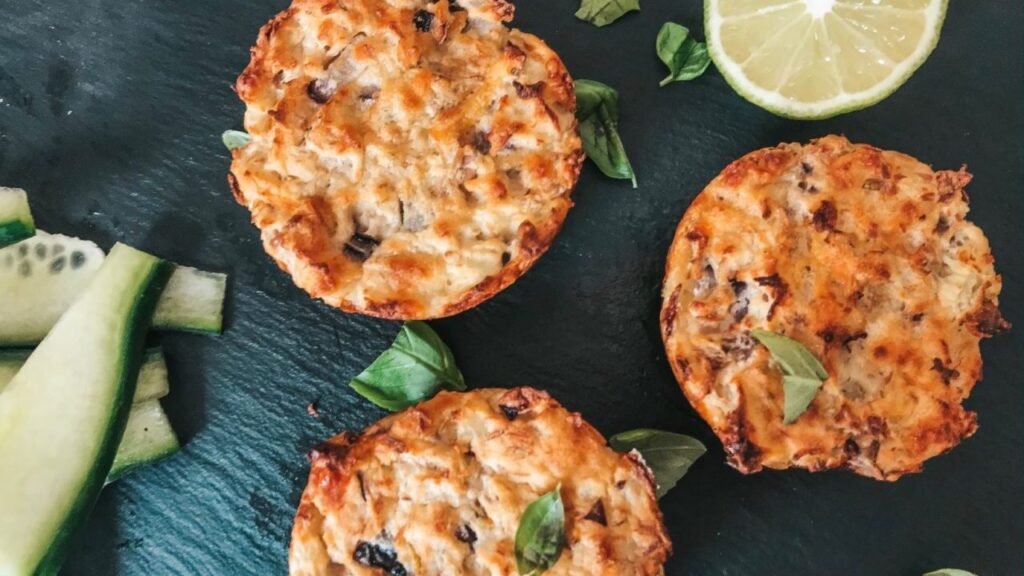
- Make into potato tots – try this salmon and potato tots recipe
- Mackerel mashed / blended with yoghurt and spinach / broccoli / avocado
- Tuna pasta sauce made with tinned tomatoes and frozen peas
- Fish cakes or “dippy fishes” (use tinned)
- In sandwiches or spread on toast
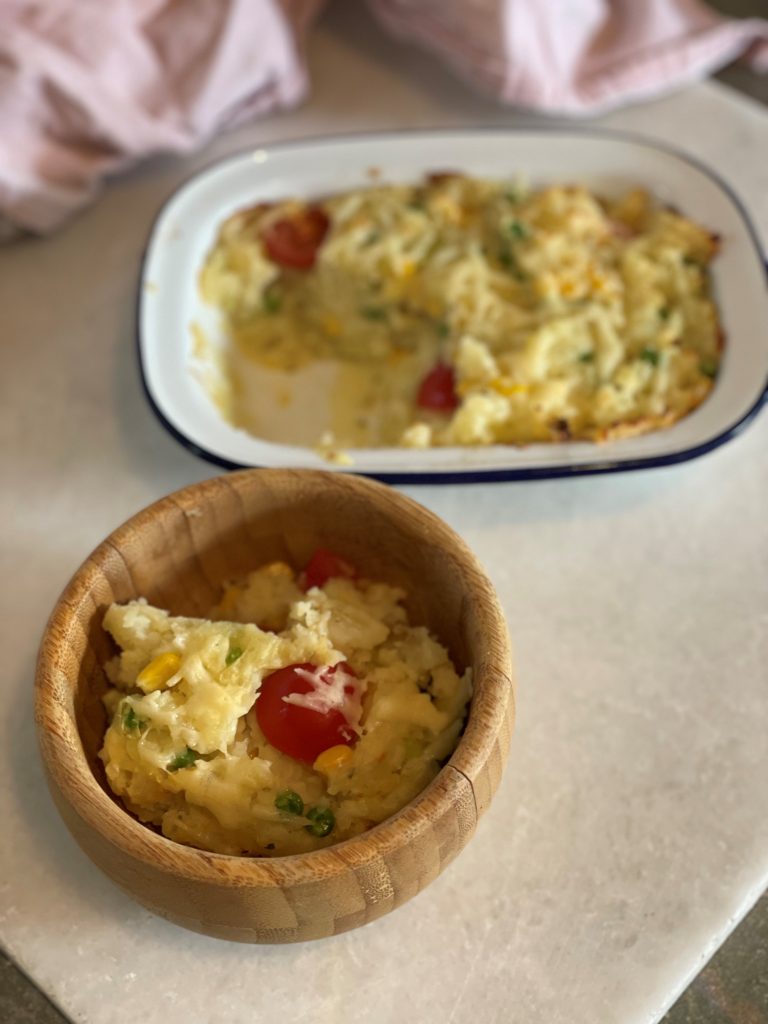
- One of our favourite recipes – Creamy lemony bake

4. Eggs
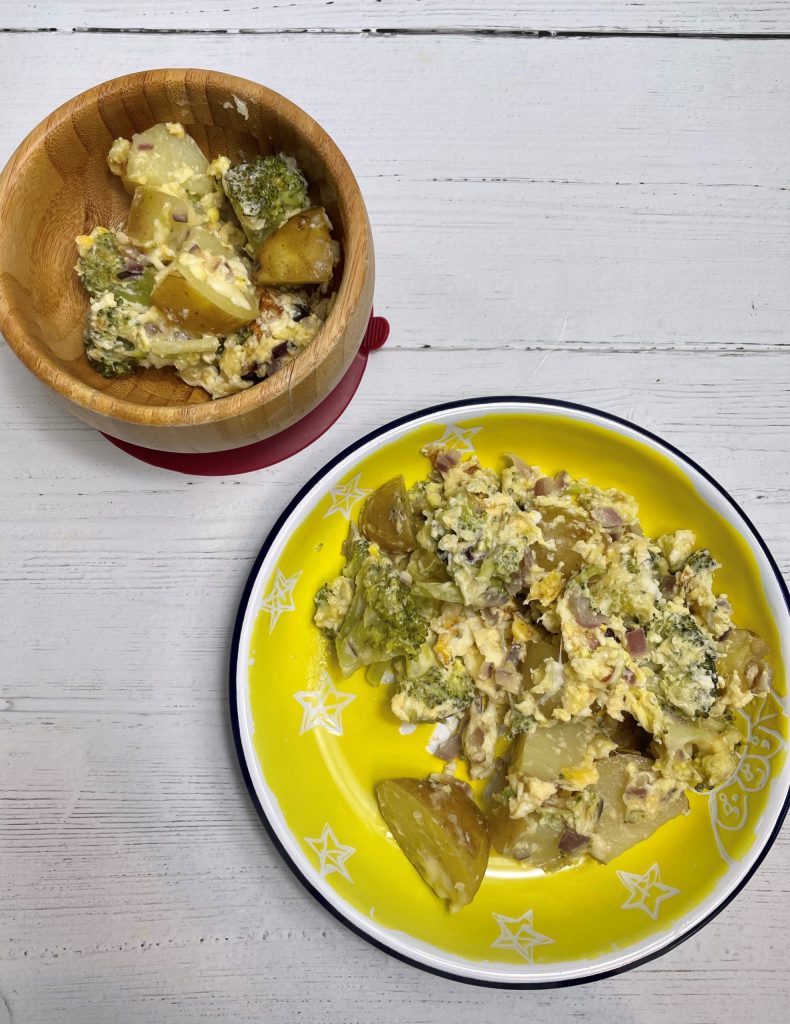
Eggs are such a great, versatile option that can be used to offer different textures – (hardboiled, omelettes, scrambled) and are a good source of readily available nutrients including protein, B vitamins and selenium. They’re inexpensive and can be used on their own or to make dishes such as pancakes, sweet or savoury muffins and fish cakes so they’re really useful to stock up on. A really quick and nutritious, balanced meal could be an egg scrambled with some frozen mixed veg and a slice of wholemeal toast.
Eggs are an allergen so when introducing them for the first time, make sure you offer them without any other foods and wait a few days before offering them again to rule out any allergic reaction.
Easy egg ideas for weaning:
- Hard-boiled egg slices as a finger food
- Scrambled egg with toast / pitta and avocado / tomatoes
- Omelette with peas / spinach / mushrooms / cheese / beans
- Simple pancake (just banana and egg) – serve with yoghurt / berries
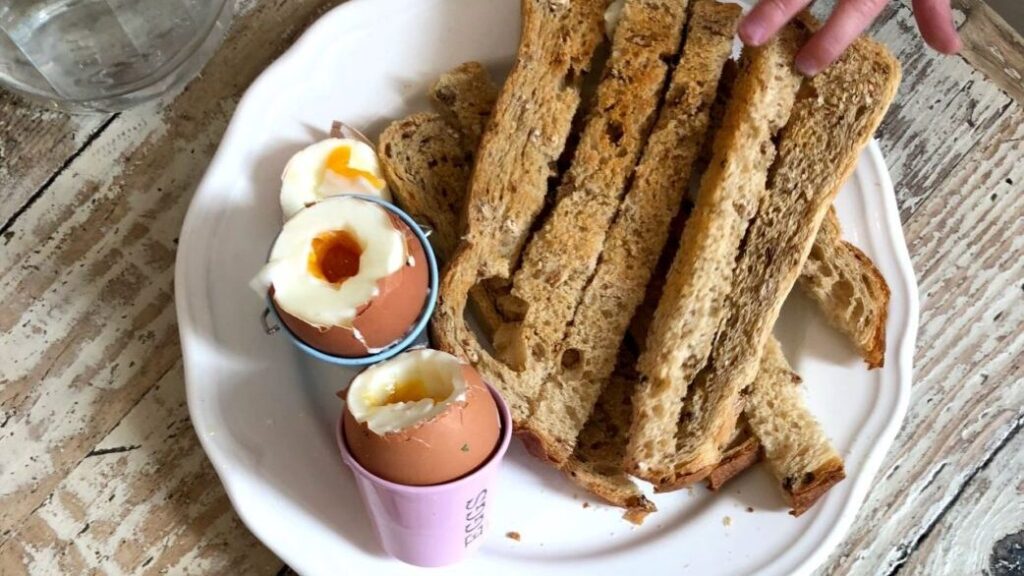
- Dippy eggs are actually fine for baby from 6 months, as long as they have the red lion stamp on them.
- Egg muffins can be an ideal option for taking on the go
- Egg fried rice can be a simple speedy option that the whole family can enjoy

5. Plain Yogurt
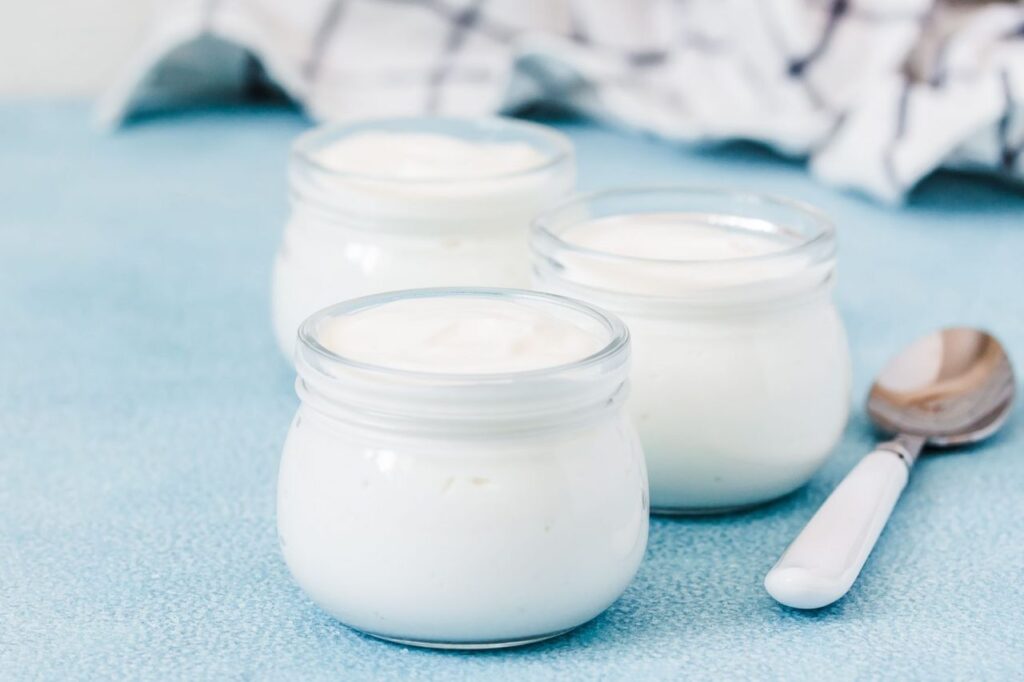
Yogurt is a perfect first food to offer when starting to introduce foods. The smooth texture is a good base for adding other foods such as frozen berries or ground nuts to mix up the textures and flavours. Nutritionally, plain yogurt is a good source of energy, protein and calcium. If your child doesn’t eat dairy, always make sure you’re opting for fortified yogurt alternatives instead.
While yogurt isn’t a “store cupboard” food, it’s certainly an ideal weaning food as it can be used in so many different ways and added to any meal or snack to add some extra nutrients.
Try to opt for plain or natural yogurt rather than sweetened or fruit flavoured ones. Once you introduce those, it’s often hard to get little ones to enjoy plain yogurt or even yogurt mixed with ingredients at home.
Easy ways to use yoghurt when weaning:
- Mix with frozen / fresh fruits – add nut butter or ground nuts
- Alongside salmon flakes and potato / vegetables
- As a dip for sliced vegetables – e.g. sliced peppers / cucumbers / carrots
- Mix with banana or peanut butter as the ultimate veggie dip!
6. Nuts & Nut Butters
We are HUGE fans of nuts and especially nut butters as an option when weaning and for feeding little ones in general and are definitely one of my 7 store cupboard staples for weaning. Nuts are another allergen and so as with eggs and fish, they should be offered one kind at a time and without any other foods. If your baby tolerates nuts with no reaction, then they can be such a versatile addition to add in extra nutrients to your baby’s meals and are great for including different textures and flavours too.
Buying large tubs of nut butters often works out cheaper and since they’re a food for all the family, having extra supply is always useful. You can eve
n keep some smaller tubs or pots in stock to take with you when travelling to add to oatcakes or toast as a snack. When it comes to whole nuts, these should always be finely ground or chopped to avoid babies choking on larger pieces. With nut butters they should be 100% smooth nut butters with no added salt or sugar.From a nutrition perspective, nuts are a good source of energy and fats for growing babies as well as a wide range of micronutrients including magnesium, potassium, iron, zinc, selenium, vitamin E and B vitamins. They’re also a good plant-based source of protein – so they’re an overall nutrient rich food to include in your diet!
Easy ways to add nuts and nut butters to your baby’s meals:
- Dip veggie sticks such as avocado or kiwi in ground nuts to help stop them being so slippery
- Swirl nut butters into yogurt with frozen berries and sprinkled oats
- Sprinkle ground nuts on porridge
- Nut butter on toast for breakfast
- Add nut butter to oatcakes
7. Oats
Oats are a wonder food when it comes to practicality and are an ideal food to keep in the cupboard for weaning. They can be used to make porridge which can be a great base for a really balanced meal by adding some fruits, yogurt and nut butter
There are loads of different oats available – ready brek (with added vitamins), rolled oats, porridge oats, most of which can all be bought in bulk inexpensively.
Porridge is one of my absolute favourite meals to offer for breakfast and can be SUCH a great way of experimenting with a huge variety of flavours and textures as well as packing in a whole range of wonderful nutrients. Check out our top ten porridge recipes.
Oatcakes are also one of my all-time favourite snacks – we love this oatcake recipe with no added salt or sugar. These are the perfect snack to have on the go and to combine with other foods such as nut butters, hummus or yoghurt for an easy, balanced snack.
Easy ways to use oats for babies:
- Porridge – cook with full fat milk or water and add frozen fruits / nut butters or nuts / yoghurt. A couple of recipes to start with could be:
- Sprinkle onto yogurt with nut butter / frozen fruits
- Oatcakes as a snack for on the go or at home
We hope you’ve found my favourite 7 store cupboard staples for weaning helpful. Check out our series on adding extras to foods to help you make the most out of your little one’s nutrition:
- How to add extra nutrients to your kids’ breakfast
- How to add extra nutrients to your kids’ lunch
- How to add extra nutrients to your kids’ dinner
- How to add extra nutrients to your kids’ snacks

First foods for weaning: FAQ
Are frozen vegetables ok for babies?
Yes, absolutely! Frozen vegetables are just as nutritious as fresh, and sometimes more so, because they’re frozen soon after picking. They’re also cheaper, cut down on food waste and are often pre-chopped. Just cook them until soft and serve them puréed, mashed or as finger foods, depending on your baby’s stage.
Is tinned fish safe for babies?
Yes, tinned fish is a great option from around 6 months. Choose fish tinned in water or spring water rather than brine to keep the salt down, and check carefully for any larger bones. Oily fish such as salmon, sardines and mackerel should be offered no more than a couple of times a week. Avoid shark, swordfish and marlin.
When can babies have runny eggs?
Babies can have runny or soft-boiled eggs from around 6 months, as long as the eggs have the British Lion stamp. Eggs without the stamp, including duck, goose and quail eggs, should be cooked until the white and yolk are solid. Eggs are an allergen, so offer them on their own the first few times.
Can babies have peanut butter?
Yes, from around 6 months. Choose a smooth peanut butter with no added salt or sugar, and spread it thinly or stir it into porridge or yoghurt, because thick dollops can be hard for babies to manage. Whole and chopped nuts aren’t suitable for under-5s. If your baby has eczema or a known food allergy, speak to your GP or Health Visitor before introducing peanuts.
What’s the best tinned fish for weaning?
Tinned salmon, sardines and mackerel are fab choices. They’re oily fish, so they provide omega-3 fats, and they mash easily into a soft texture. The small, soft bones in tinned salmon and sardines can be mashed in and add extra calcium, but remove any larger, firmer pieces. Tinned tuna is fine too, although it doesn’t count as an oily fish.